21 Crowns or No Treatment at All? Why Dental Overtreatment Is the Quiet Tax on Your Smile and What You Can Do
You sit down in the chair for what you thought was a routine checkup. A few minutes later, a treatment coordinator hands you a printout: $4,800 of “necessary” work. Maybe four quadrants of deep cleaning. A crown on a tooth that has never hurt. Two fillings you don’t remember being told about. The pen is already pointing to where you sign.
If your gut says something feels off, your gut is right to ask questions.
Dental overtreatment and upselling are not fringe problems or paranoid Reddit theories. They are a measured, documented pattern in modern dentistry, and they cost American patients real money, real teeth, and real trust every year. This is what the evidence actually says, why the problem is getting worse not better, the most common upsells to watch for, and how to make a confident decision before you ever swipe your card.
The 50 state experiment that started the conversation
In a now famous investigation, journalist William Ecenbarger took the same set of dental X rays and the same medical history to 50 different dentists across 28 states. His own panel of trusted dentists had agreed he needed roughly $500 of work, primarily a single crown.
What he heard from those 50 offices was wildly inconsistent. A dozen practitioners proposed treatment substantially in line with his panel of experts. A Park Avenue dentist in Manhattan, however, told him he needed 21 crowns and 6 veneers, a treatment plan totaling roughly $29,850. The same mouth. The same X rays. A nearly sixtyfold difference in price.
When Ecenbarger sought one final opinion at a dental school clinic, where the examiner’s incentive is to learn rather than to sell, the diagnosis matched his original panel almost exactly.
That investigation is decades old, but the pattern it exposed has not gone away. It has just gotten more sophisticated.
What the modern evidence shows
Three more recent threads of evidence make it clear this is a structural problem, not a few bad actors:
1. Federal settlements with major dental chains. A national pediatric dental chain agreed to pay roughly $24 million to settle Justice Department allegations that it submitted false Medicaid claims for “medically unnecessary” procedures on children, including baby root canals, extractions, and stainless steel crowns, between 2009 and 2011. A separate large dental management chain agreed to pay $450,000 over allegations it pressured dentists to increase revenue by using high pressure sales tactics on low income patients. A bipartisan U.S. Senate Finance Committee report later concluded that another major chain employed a “fundamentally deceptive” business model that resulted in a sustained pattern of substandard care.
2. Peer reviewed research on clinical decision making. A 2021 study of final year dental students at the University of Valencia tested how they would respond to ten standardized clinical cases. The findings were sobering: 87.8% of students proposed overtreatment for the repair of a defective restoration, and 63.2% recommended unnecessary diagnostic tests for an early occlusal cavity. If the bias toward “do more” is already showing up in dental school, it is unlikely to disappear in a busy private practice with revenue targets.
3. Aesthetic and cosmetic creep. A 2025 systematic review in BMC Medical Ethics on cosmetic dentistry was direct: commercial pressures and idealized beauty standards have driven a notable increase in overtreatment, with unnecessary procedures performed to meet aggressive marketing rather than clinical need. The American Dental Association’s own Code of Ethics has long stated that recommending unnecessary services is unethical conduct, which is exactly why this conversation is uncomfortable inside the profession.
A separate analysis of patient initiated second opinions in healthcare more broadly found they led to a change in diagnosis roughly 15% of the time and a change in treatment roughly 37% of the time. Translate that to dentistry: more than one in three patients who push for a second look ends up on a different, usually less invasive and less expensive, path.
Why dental overtreatment is rising today
If overtreatment has been documented for decades, why hasn’t the market corrected itself? Because four overlapping forces have actively made it worse since the early 2010s. Understanding them is the single most useful thing a patient can do, because it tells you exactly where the pressure on your treatment plan is coming from, and it almost certainly isn’t from the dentist holding the explorer in your mouth.
1. The corporate consolidation of dentistry
For most of the 20th century, your dentist owned the building, the chair, and the practice, and lived or died by their long term reputation in the community. That model is rapidly disappearing. According to American Dental Association data, dentist affiliation with Dental Service Organizations (DSOs) jumped 47% between 2017 and 2023. Among dentists who graduated in the last decade, roughly 23% are now DSO affiliated, and surveys of dental school seniors show DSO bound graduates rose from about 12% in 2015 to roughly 30% by 2020.
Behind those DSOs sit private equity firms. As of mid 2025, industry trackers count approximately 130 private equity backed dental platforms in the United States, more than in almost any other healthcare specialty. Private equity has a defined investment thesis: buy practices, drive same store revenue growth for three to seven years, sell the platform at a higher multiple. That thesis is rational for investors. It is also, by definition, a force that pushes any individual office toward more procedures per patient, more often.
2. Production targets, quotas, and case acceptance scripts
The mechanism by which corporate ownership translates into your treatment plan is simple: revenue targets. Internal documents and former employee testimony surfaced in the FRONTLINE and Center for Public Integrity investigation showed dentists at one major chain receiving production based bonuses once daily revenue thresholds were cleared, with bonus tiers escalating from there. In the same investigation, an Aspen Dental settlement involved allegations of pressuring dentists to use high pressure sales tactics on low income patients.
Even outside the most publicized cases, the apparatus is now standard. Many practices, corporate and independent alike, train front office and clinical staff in “case acceptance,” which is the polite industry term for the percentage of recommended treatment that patients actually agree to pay for. Intraoral cameras, originally developed as a clinical tool, are explicitly marketed to dentists as devices that “pay for themselves” in additional case acceptance. None of this is illegal, and some of it is genuinely useful for patient education. But it is also, structurally, a sales engine bolted onto a clinical encounter.
3. The information gap between you and the chart
The final force is the oldest one, and it is what makes all the others work: you cannot read your own X rays. You don’t know what a 4mm pocket depth means versus a 2mm one. You don’t know which “D” code on your treatment plan is a routine filling and which is a rarely justified upsell. The dentist has all of the information; you have a chair, a glaring overhead light, and someone in scrubs telling you what you need.
That asymmetry is not malicious in most offices. But it is the soil in which the other three forces grow. The defense is not learning dental school in a weekend. It is knowing that the asymmetry exists, and refusing to make irreversible decisions inside it.
The four upsells you are most likely to encounter
Most overtreatment does not look like 21 crowns. It looks like one of these everyday recommendations, quietly added to your treatment plan:
1. Four quadrants of “deep cleaning” (scaling and root planing) when you don’t actually have periodontal disease. Scaling and root planing is a real, evidence based treatment for chronic periodontitis. It is also the single most overprescribed procedure in general dentistry. Published case accounts from practicing dentists describe patients arriving for second opinions after being told they needed all four quadrants treated, only to find healthy 2 to 3mm gum pockets, no visible calculus, and zero bleeding points on examination. The clinical bar for SRP is real (typically pocket depths of 4mm or more, bleeding, and bone loss visible on X ray); if no one explained those numbers to you, ask.
2. Crowns on teeth that don’t hurt and don’t have decay. Crowns are appropriate for cracked teeth, large failed fillings, or after root canals. They are not appropriate as a default upgrade for an aging composite filling that is functioning fine. Once a tooth is crowned, it can never go back. You have permanently removed healthy tooth structure.
3. “We need to replace all your old amalgam fillings.” Unless a filling is broken, leaking, or showing decay underneath on X ray, the ADA does not recommend removing functional amalgam restorations purely because they are old or made of mercury containing material. This is one of the most cited red flags by dental watchdogs.
4. Same day pressure on a treatment plan worth thousands of dollars. True dental emergencies are rare. Crowns, implants, full mouth reconstruction, and orthodontic plans almost never require a decision before you walk out the door. When a major diagnosis appears suddenly after years of healthy checkups, when the plan feels aggressive, or when you are pressured to decide immediately, those are the moments to slow down and seek another perspective.
What it actually costs you when this goes wrong
The financial damage is the most visible piece, but it is not the only piece.
- Money you didn’t have to spend. A single unnecessary crown is roughly $1,000 to $1,800 out of pocket. Four quadrants of unjustified scaling and root planing can run $800 to $1,200 even with insurance. Multiply that across a family.
- Tooth structure you can’t get back. Crowns, fillings, and root canals are irreversible. Once enamel is drilled, it does not regenerate. An overtreated tooth often becomes a more fragile tooth a decade later, requiring more work, a cycle the original dentist may never see.
- The trust tax. Patients who have been burned once often avoid the dentist altogether for years afterward. That avoidance is how small, fixable problems become abscesses, extractions, and emergency room visits. The irony is that overtreatment by some providers ends up driving genuine _under_treatment for the patient overall.
- The decision paralysis. Standing in front of a treatment plan you don’t understand, with a coordinator waiting, is genuinely stressful. That stress is what high pressure sales scripts are designed to exploit.
What an informed patient actually does
You don’t need to become a dental expert. You need to do four things, in order, before you agree to anything significant:
- Ask for the treatment plan in writing, with each procedure code (a “D” code) and the supporting clinical finding for it (a specific tooth, a pocket depth, a finding on the X ray).
- Request a copy of your X rays and chart notes. These belong to you. Most offices will email them within minutes.
- Don’t decide in the chair. Take 24 to 72 hours. A legitimate practice will not punish you for this.
- Get a second opinion before you commit to anything irreversible or anything over a few thousand dollars, especially crowns, root canals, implants, and full mouth treatment plans. The Consumer Guide to Dentistry uses roughly $3,000 as a useful threshold; we’d argue for a second opinion any time the recommended work permanently changes a tooth.
If that sounds like more legwork than most people will realistically do, that’s the honest problem. Calling around, paying out of pocket for new X rays, taking another half day off work: the system quietly relies on patients giving up before they get there.
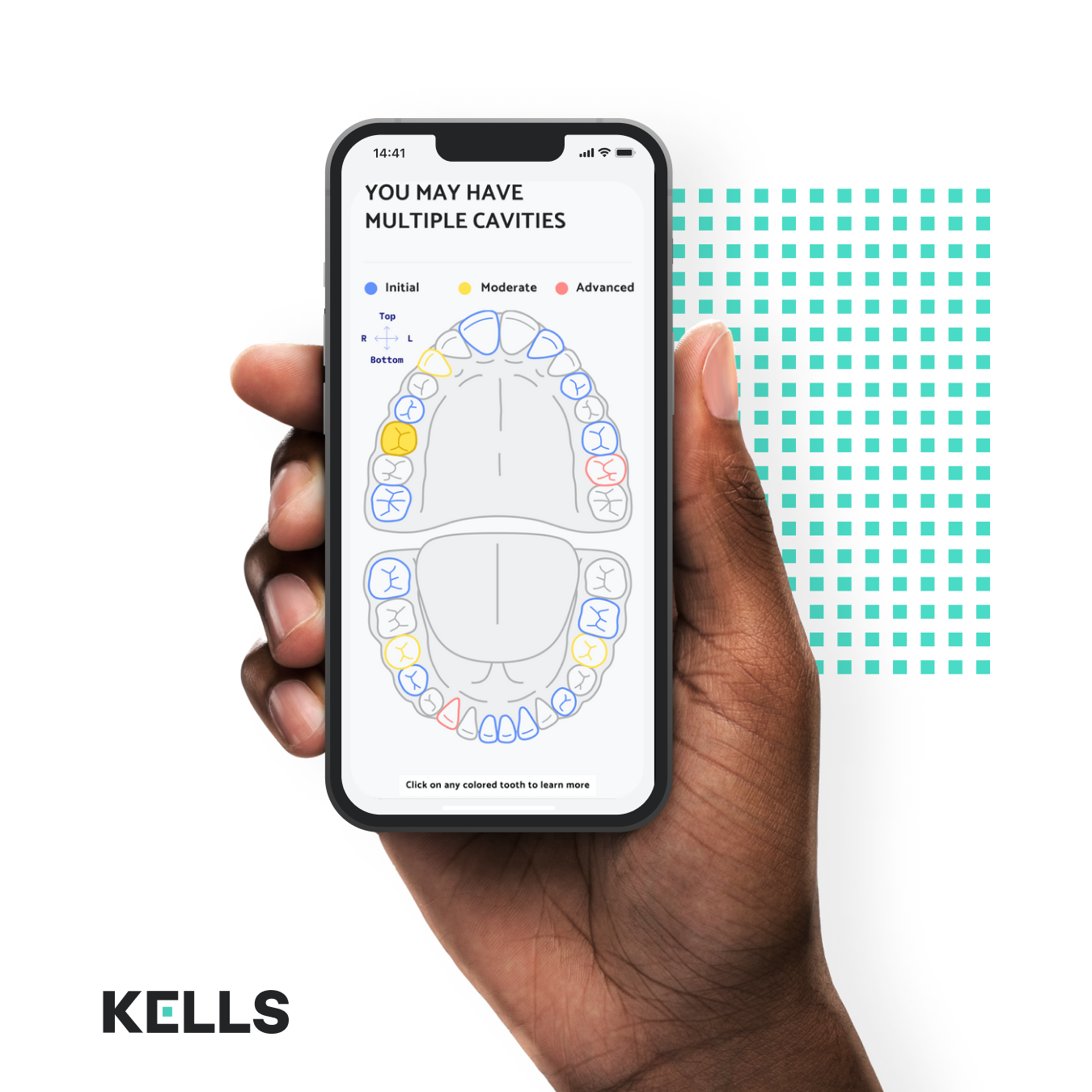
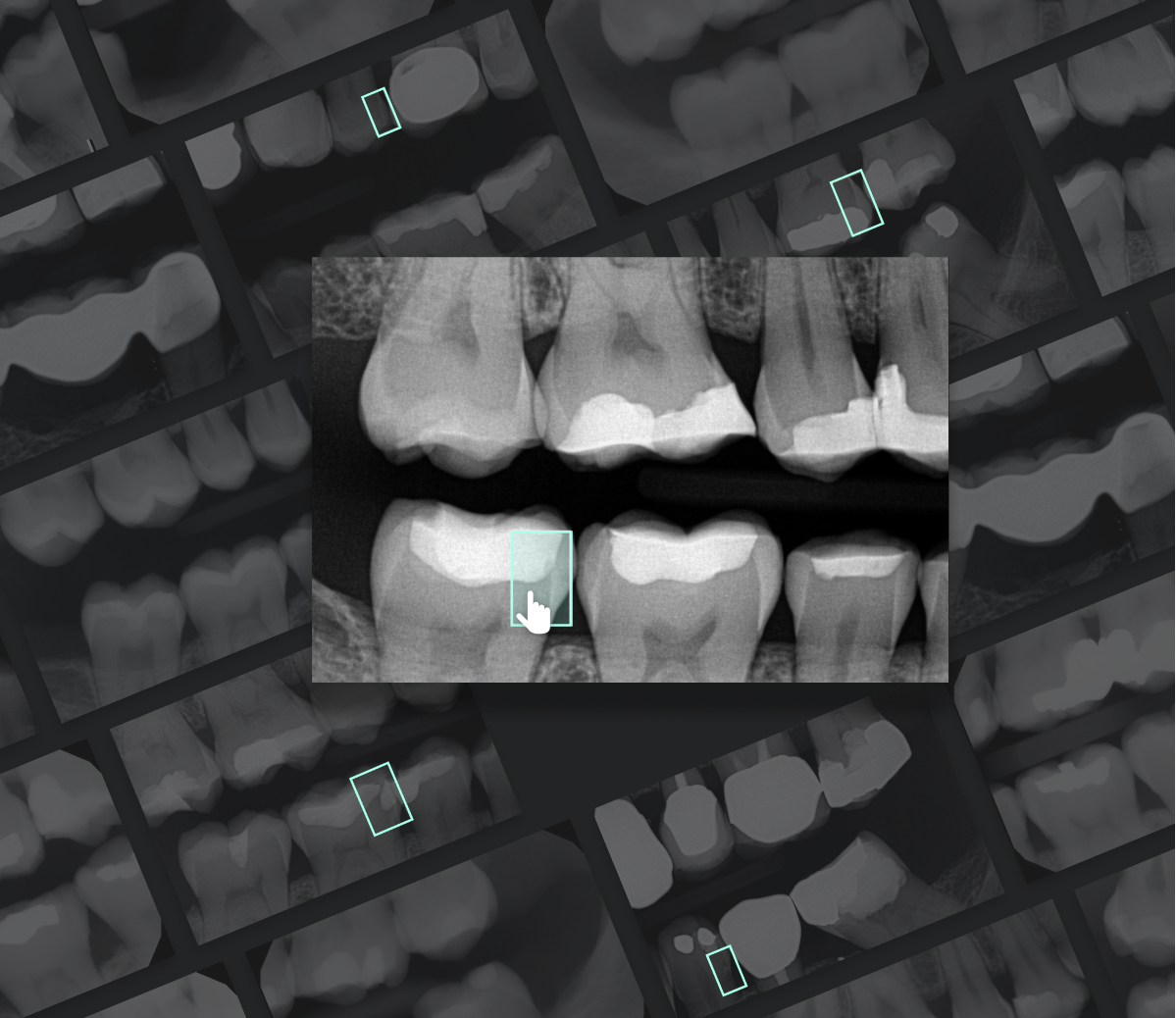
That gap is part of why we built KELLS Treatment Validation, a service designed to make a second look on your oral health and your treatment plan a few minutes of effort instead of a few weeks. They aren’t a substitute for your dentist. They’re a way to walk into the next conversation with information of your own.
Sources and further reading
- Ecenbarger, W. How Honest Are Dentists? / How Dentists Rip Us Off, Reader’s Digest, February 1997.
- Dollars and Dentists, FRONTLINE and Center for Public Integrity, PBS, 2012.
- U.S. Department of Justice settlement with Kool Smiles and Benevis (2018).
- U.S. Senate Finance Committee bipartisan report on Small Smiles and CSHM.
- American Dental Association, Health Policy Institute — data on DSO affiliation, 2017 to 2023.
- FOCUS Investment Banking, 2025 Dental Transactions Update on private equity backed DSO platforms.
- Catalá-Pizarro, M. et al. Overtreatment in Restorative Dentistry: Decision Making by Last-Year Dental Students. Int J Environ Res Public Health, 2021.
- Aesthetic dentistry and ethics: a systematic review of marketing practices and overtreatment in cosmetic dental procedures. BMC Medical Ethics, 2025.
- Kazemian, A. et al. How much dentists are ethically concerned about overtreatment; a vignette-based survey in Switzerland. BMC Medical Ethics, 2015.
- American Dental Association Principles of Ethics and Code of Professional Conduct.
- ADA MouthHealthy — Scaling and Root Planing for Gum Disease.
- Consumer Guide to Dentistry — recommendations on dental second opinions.